
Everything You've Been Told About Genius Is Wrong
How Darwin, Stephenson, and Lincoln Debunk The Biggest Lie Surrounding Genius

Introduction
“Genius appears to be a mystery, immune to scientific analysis.”1
Everyone agrees that people such as Newton, Einstein, and Mozart are geniuses. This much is clear. But if you ask someone to explain what makes a person a genius, it is unlikely that you will get a clear answer. Even academics point to special genes, innate gifts, or incommunicable powers—yet none of these answers are practical.
Whatever the case may be, genius seems to have some mysterious quality. This has led to a belief that geniuses are inexplicably different than the rest of us. And as cognitive psychologist Michael J. A. Howe states, “Staring out with the belief that something is inherently mysterious creates extra barriers to understanding.” 2
“We enjoy being told about those geniuses who amaze us with feats that are especially spellbinding. Without them it would be harder for people to cling to the belief that geniuses are a special breed, akin to the magicians and dragons and fabulous giants that populated the mythologies of past generations.”3
Unable to explain genius, many have fed a dangerous idea that there exists a special breed of people that are somehow different from the rest. Such an idea is devastating for aspiring young people and society at large because it implies that ordinary people, for some inexplicable reason, lack some mysterious quality that others possess.
While “[i]t is entirely conceivable that geniuses are indeed born with special characteristics that partly account for their outstanding achievements,” they are not a different species.4 Doubtless they are unique, but insofar as we can tell, they are flesh and bones just like the rest of us. Remarkable? Yes. Cut from a different cloth? No.
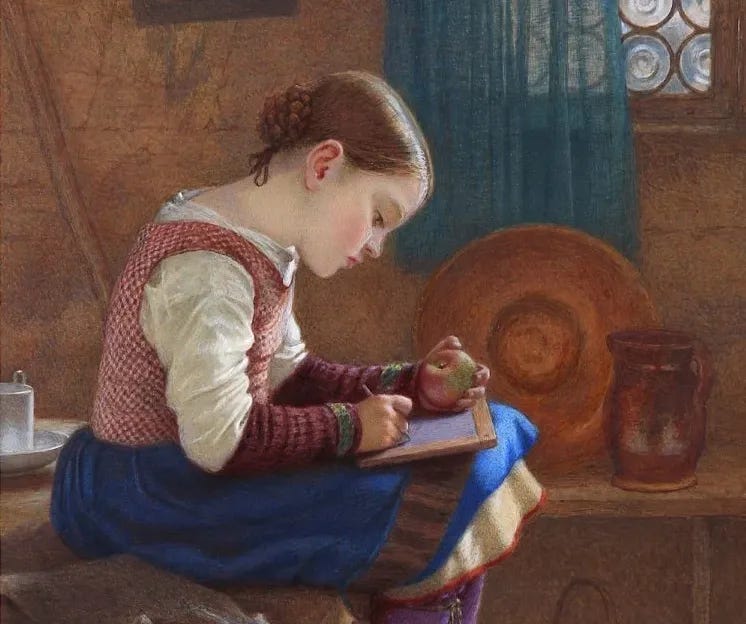
Difficult as it may be, explaining genius is possible. So, to explain what others have not, and to show that geniuses are not a super-breed unlike the rest, let us examine the lives of three widely-considered geniuses: Charles Darwin, George Stephenson, and Abraham Lincoln.
Doing so will not only dispel the dangerous idea that geniuses are a special breed, but in bringing these intellectual giants down to earth the average person can be inspired to achieve more. Humanizing these ivory figures may be enough for the ordinary person to imitate those they once viewed as gods.
Charles Darwin: Extraordinary Enthusiasm
Charles Darwin was born into a unique family. His grandfather, Erasmus Darwin, was an “imaginative polymath famous for his long scientific poem The Botanic Garden,” and by the time Charles was a young boy, Erasmus had already “speculated on evolution in a series of volumes on organic life.”5 Erasmus seemingly inculcated these scientific interests onto his own children. His son, Robert, the eventual father of Charles Darwin, was himself a medical doctor. As it happened, Charles’s other grandfather, Josiah Wedgewood, was also interested in botany. Josiah’s passion was seemingly taken up by his daughter, Susannah, who, in turn, “urged Charles to share her fascination with plants.”6
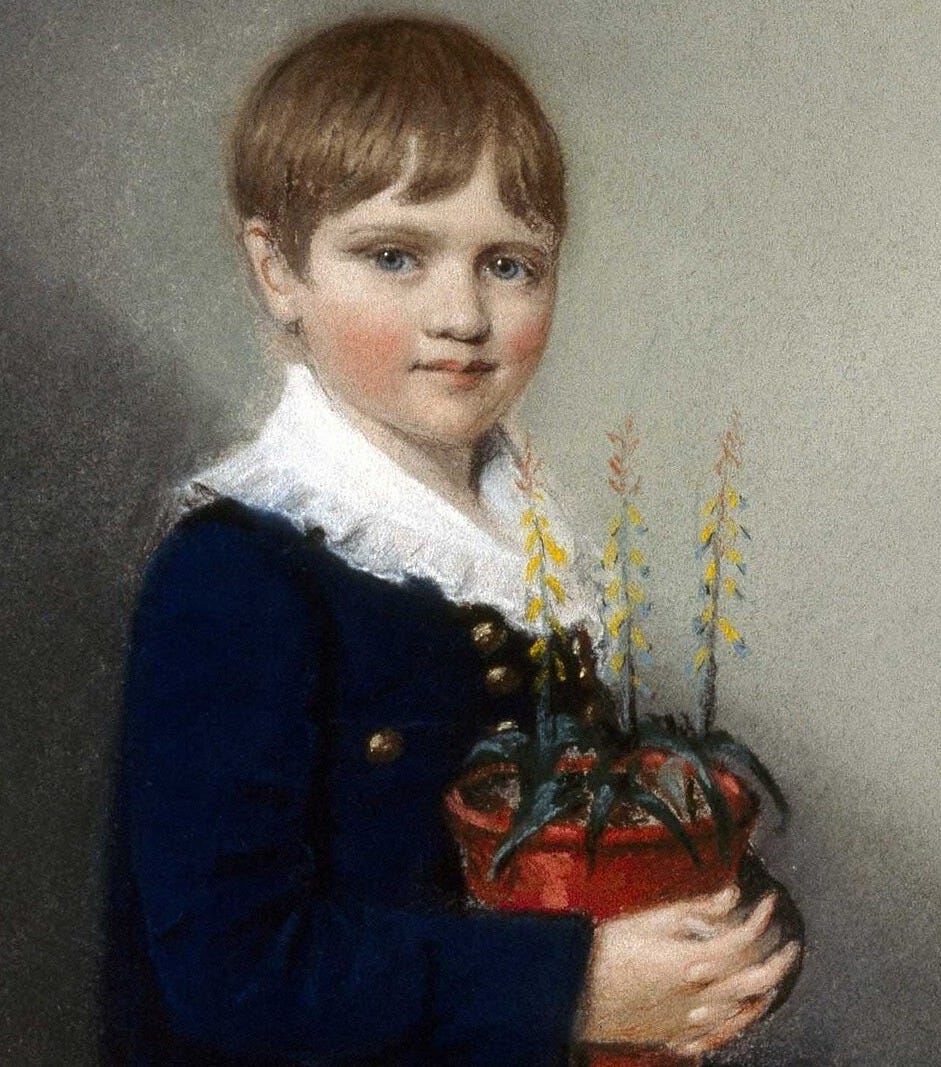
While his family’s interests were peculiar, it is worth noting that Darwin was, by all accounts, a normal child. Unlike the stereotypical child prodigies associated with the likes of Mozart, Darwin “was unusual among geniuses in being neither a prodigy nor even the least bit precocious as a child.”7 Like other kids his age, he enjoyed playing games and time outside. “With curiosity about the natural world being almost a family trait,” Darwin especially loved collecting, a hobby that “was [also] encouraged by his mother.”8 Despite this, his father “regarded the young Charles Darwin as being somewhat aimless.”9
This was false. However dull Charles appeared, he was quite the passionate child. Although his “schoolwork was never more than average,” Darwin loved natural history; despite lackluster performances in the classroom, he and his brother carried out “experiments in a crude laboratory they had set up at home.”10 Upon discovering this, the headmaster denounced Charles as a “‘stupid fellow’ who ‘will attend to his gases and his rubbish, but will not work at anything useful.’”11
This too was false. What remained undetected by adults was noticed by his classmates:
“Darwin’s school friends were already noticing that in contrast to his mediocre performance at lessons he knew a great deal about natural history and was good at identifying the objects they brought to him.”12
While it would take years for his father and teachers to notice, Charles Darwin had a burning passion for the study of natural history. With unabated enthusiasm, he spent years collecting bugs, studying plants, and observing wildlife. He loved reading about his interests, and, as a result, he gradually transformed from an “indiscriminate collector to [an] informed naturalist.”13
Considering that people tend to focus and preform better on tasks that they are interested in, Darwin’s future success as a biologist—while impressive—is suddenly less surprising. While it could be said that his family was special, or that his interests were unique, he was not some wonderous prodigy. If he enjoyed any magical quality it was an unbridled enthusiasm that he sustained throughout his entire life. While his evolutionary theory is widely regarded as genius, one can now understand how his future success and reputation as a genius came to be.
George Stephenson: Iron Perseverance
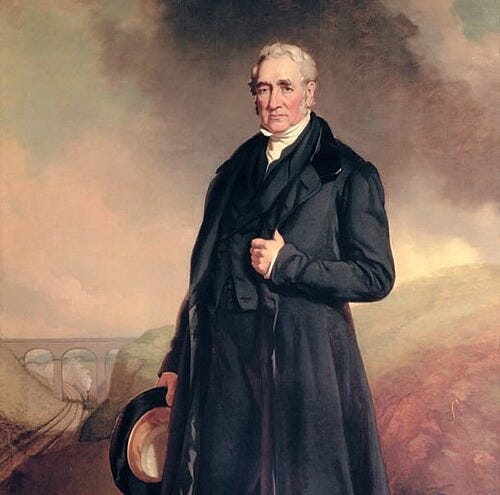
People often imagine famous engineers coming from prestigious universities, not run-down railyards. Moreover, they often associate success in engineering with an academic rigor that could only be obtained from years spent in the classroom. But men like George Stephenson show us that brilliance can shine in the darkest of places.
Born June 9th, 1781, George was one of six children born to Robert Stephenson, a mine fireman who earned “twelve shillings per week,” a sum barely enough to keep his family fed.14 In this poor, working-class village, Robert could not afford education. As a result, his son George was illiterate and lacked even the most basic knowledge of arithmetic. Despite this unpromising beginning, George “was unusually resourceful” for a young boy:
“For example, there is a story of him spending a whole day looking after horses at the local market to earn a shilling so that his sister could buy a new bonnet, and another report of him getting a job minding cows at tuppence per day.”15
Perhaps inspired by his father, George’s childhood was spent working “a variety of jobs, leading plough-horses, hoeing turnips, working as a colliery ‘corf-bitter’ employed to clear stones and dross from the coal, and looking after the horse-powered ‘gin’ or winding-wheel which lifted coal out of the mine.”16 Neighbors slowly noticed that despite his modest background, this poor boy was remarkably industrious.
Even the hardest working boys find time for play. For George, he loved tinkering with nearby engines and machines. It is worth noting here that the “future railway engineer happened to grow up with railways in his front yard.”17 Academic handicaps could not stop the young Stephenson from building model engines out of “clay from a local bog and hemlock branches that served as imaginary steam pipes.”18
No different than a child playing with blocks or building forts, George continued pursuing his interests as he readily employed himself in the local railyards with the hopes of one day becoming an engineman. Should this dream come true, George determined that he ought to familiarize himself with the very machines that he would one day be working on. Before he was eighteen, he had
“applied himself so assiduously and successfully to the study of the engine and its gearing—taking the machine to pieces in his leisure hours for the purpose of cleaning it and understanding its various parts—that he soon acquired a thorough practical knowledge of its construction and mode of working, and very rarely needed to call the engineer of the colliery to his aid. His engine became a sort of pet with him, and he was never wearied of watching it and inspecting it with admiration.”19
Once again, we see how enthusiasm can lift one to new heights: as a result of his continued employment and obsession with engines, the uneducated Stephenson received a hands-on education. His growing knowledge made him “increasingly aware of how much he needed the knowledge that his lack of education had denied him.”20 Fueled by this, the hard-working Stephenson traveled three nights a week to a neighboring village so that he could receive elementary lessons in reading and writing. Soon, he was learning basic arithmetic and even “used the side of a coal wagon as a blackboard to work on.”21
At twenty-nine, while working as a brakesman, an atmospheric engine broke at the pit George was working. The malfunctioning machine caused the mine to close down which caused the company to lose considerable sums of money. After all the experienced engineers had failed to fix the device, Stephenson was finally given a chance to service it. Despite everyone’s doubts, the young brakesman fixed in three days a machine that had been inoperable for an entire year. This surprised his employers so much that he was promoted to engineer.
While remarkable to those around him, Stephenson’s efforts can now be understood in a different light. A testament to hard-work, George Stephenson—the man who would go on to invent the locomotive engine—proves that oftentimes what we call genius is primarily the result of enthusiasm and perseverance.
Abraham Lincoln: Amazing Ambition
Abraham Lincoln was born on the same day as Charles Darwin. At a glance, this seems to confirm the traditional narrative that geniuses enjoy some cosmic blessing unlike the rest of us. While both men’s genius is widely recognized, albeit in different fields, anyone who has studied them can attest to the fact that their brilliance is anything but the result of some astrological coincidence.
Born into an undistinguished frontier family, Lincoln was, like Stephenson, poor. Also like Stephenson—and unlike Darwin—Lincoln was put to work at a young age. “Allowed to attend school only ‘by littles’ between stints of farmwork,” he received a minimal education that hardly amounted to a single year.22 Lincoln’s own remarks illustrate his unpromising childhood: “If a straggler supposed to understand latin happened to sojourn in the neighborhood, he was looked upon as a wizzard.”23
“To all human appearance the early life of Abraham Lincoln was as unpromising for becoming a great man as you could imagine.”24
It is foolish to suggest that Lincoln was destined to be the political genius he later became. He was not tutored like Alexander the Great was under Aristotle. He did not learn from observation like Marcus Aurelius did under Antoninus Pius. He did not study war at a military academy like Napoleon or Robert E. Lee did. Yet, he managed to become an American president and is largely considered to be among history’s most genius politicians and supreme commanders. How can this be?
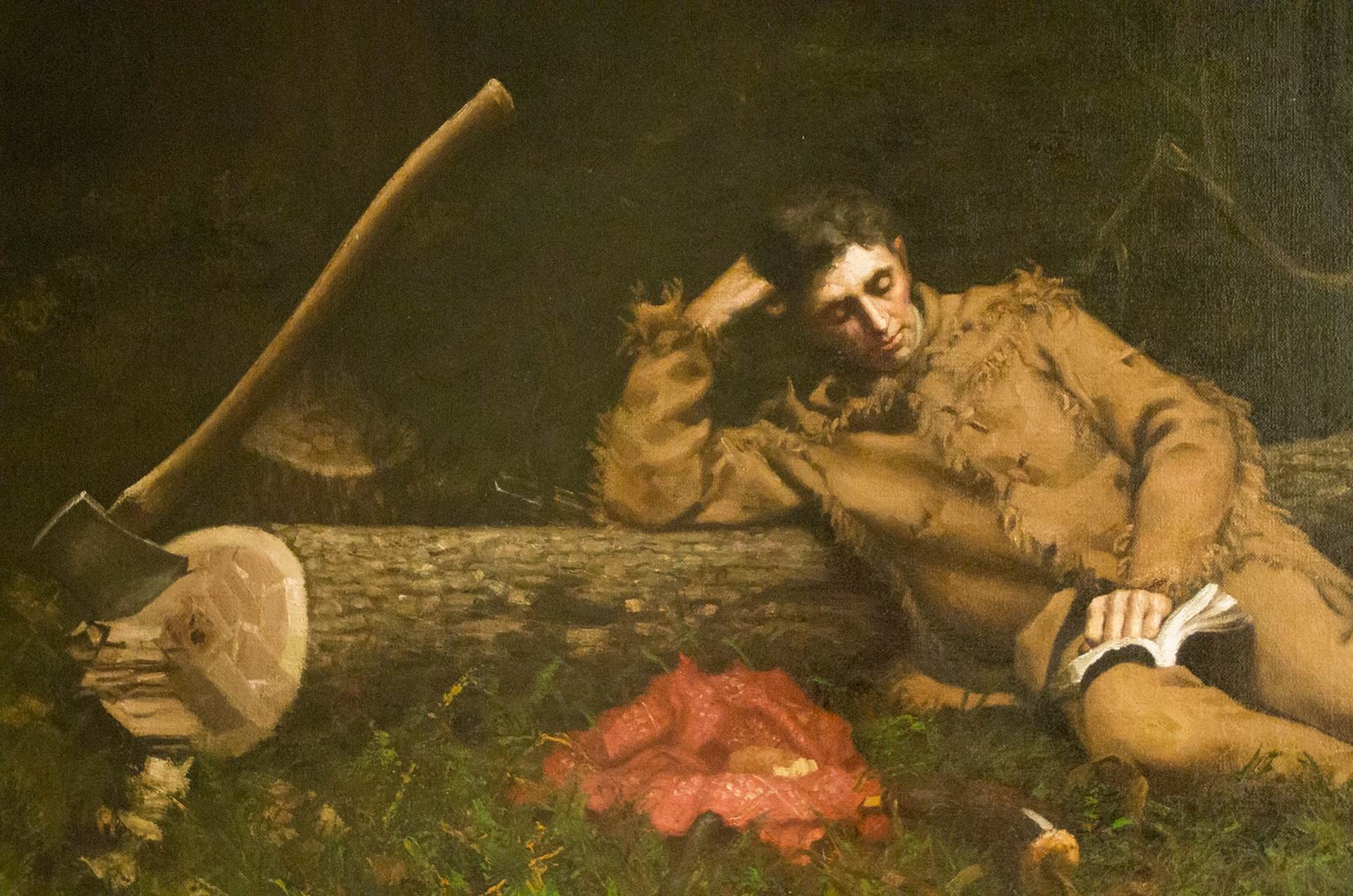
Much like the geniuses we have heretofore examined, Lincoln’s success can be largely attributed to his keen interests and uncanny enthusiasm. On the one hand, Lincoln was inspired by whatever books he could lay his hands on and whatever stories he heard about on the frontier. On the other, the self-educated backwoodsman was driven by the “negative example” of his father.25 Here, dreams and fears combined to instill within him a childhood ambition that would push him throughout his days.
Fueled by this enduring passion, Lincoln committed himself to transcend the trappings of his hardscrabble youth and reached heights others thought unimaginable.
Conclusion
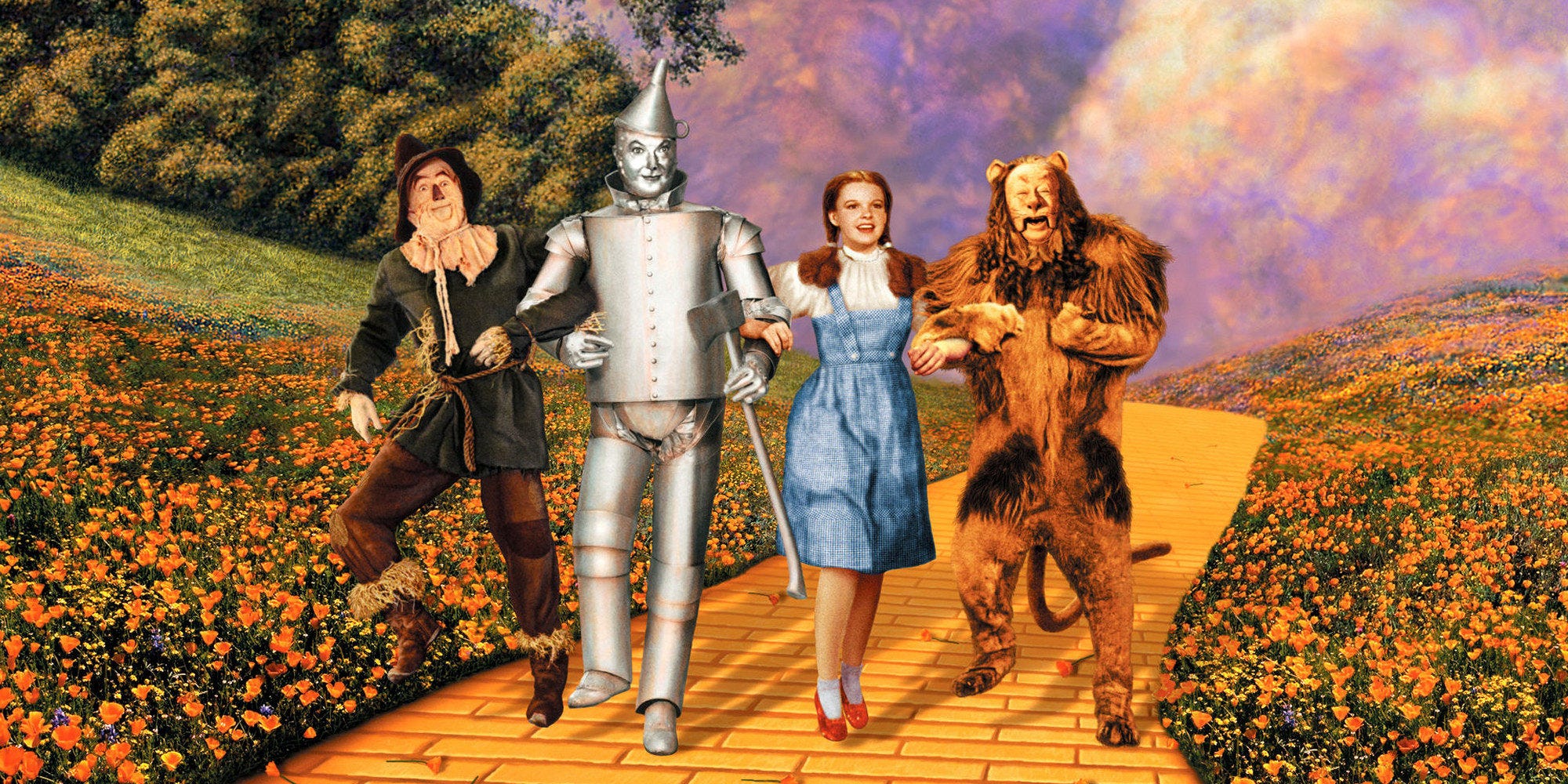
At the end of The Wizard of Oz, Dorothy pulls back the curtain only to discover that the fearsome figure is merely a front being operated by an otherwise normal man. Explaining genius is no different. Upon examining the three men discussed here, one is confronted not with evidence of rare genes, supernatural abilities, or incommunicable talents, but with the plain examples of enthusiasm, perseverance, and ambition—traits that lend themselves to a single cardinal virtue: hard work.
Unsurprising as genius may seem, one is left much like the Cowardly Lion, Scarecrow, and Tin Man before Oz.
Perhaps genius has been inside each and every one of us all along…
Thanks for Reading—Stay Tuned for More
If this spoke to you, consider supporting with a Like, Share, or Restack—it helps more thoughtful readers like you find From the Shelves.
You’re part of a growing community committed to Leadership, Growth, and Wisdom—drawn from the shelves, and lived out in the world.
Have a strong, thoughtful week.
Leadership. Growth. Wisdom. From the shelves—for the Integrated Self.
Michael J. A. Howe, Genius Explained (Cambridge: Cambridge University Press, 1999), 1.
Ibid., 2.
Ibid., 23.
Ibid., 10.
Ibid., 30.
Ibid., 35.
Ibid., 29.
Ibid., 35.
Ibid., 28.
Ibid., 32, 33.
Ibid., 33. Howe is quoting Peter Brent, Charles Darwin (London: Heinemann, 1981), 32.
Ibid,. 35.
Ibid.
Ibid., 60.
Ibid., 65.
Ibid., 66.
Ibid., 61.
Ibid., 66.
Samuel Smiles, The Life of George Stephenson, Centenary ed. (London: John Murray, 1881; originally published 1857), 9. Quote encountered in Howe, 67.
Howe, Genius Explained, 68.
Ibid., 70.
Doris Kearns Goodwin, Team of Rivals: The Political Genius of Abraham Lincoln (New York: Simon & Schuster, 2005), 51. Goodwin is quoting Scripps’s autobiography, in Collected Works of Abraham Lincoln, vol. 4, 62.
Abraham Lincoln, statement of December 20, 1859, accessed at abrahamlincolnonline.org.
Wilson and Davis, eds., Herndon’s Informants, 83. Quote encountered in John Meacham, And There Was Light (New York: Random House, 2022), 10.
Fred Kaplan, Lincoln: The Biography of a Writer (New York: HarperCollins, 2008), 7.
What a beautiful post! There are many different kinds of genius; all should be celebrated!
🔥