
When Stoicism Fails: Finding Strength in the Heart of Another
Lessons From Two Women And Their Impact On One Of History's Greatest Figures

Introduction
It has been written, “be like the rock that the waves keep crashing over. It stands unmoved and the rage of the sea falls still around it.”1
Sadly, rocks erode.
Indifference then can only be maintained for so long. It may be useful for enduring hardships, but eventually, one must relent. This is not to suggest that one has to be feeble, only that one has to be honest with themself. Everyone is human. To lose sight of this would be of tremendous folly.

Take George Washington—the impenetrable leader of granite—as an example. Revered for his commanding aura and solid, stoic nature, Washington was nonetheless an intensely emotional man. He could maintain forbearance during moments that would make others crumble; endure defeats that would leave others in pieces; yet it was said that even he had a breaking point:
“Yet those who have seen him strongly moved will bear witness that his wrath was terrible. They have seen, boiling in his bosom, passion almost too mighty for man.”2
On Washington, John Adams said, “He had great self-command. . . but to preserve so much equanimity as he did required a great capacity. Whenever he lost his temper, as he did sometimes, either love or fear in those about him induced them to conceal his weakness from the world.”3 This weakness is the very thing one has to be honest with themself about. No matter how strong we are physically, nor how constituted we are emotionally, we will eventually break down.
Hardened Hearts
Many biographers note that much of Washington’s “stoical personality” was a result of the strained relationship he shared with his mother.4
Orphaned at twelve, Mary Ball Washington endured a hard life that was common to people of the eighteenth century. This developed within her a strict and unrelenting nature. It was said that she was the one who “drilled habits of thrift and industry into her children, including rising early with the sun, a strict farmer’s habit that George retained for the rest of his life.”5 Her intense and commanding nature created between her and George a coldness that would haunt him for the rest of his life.
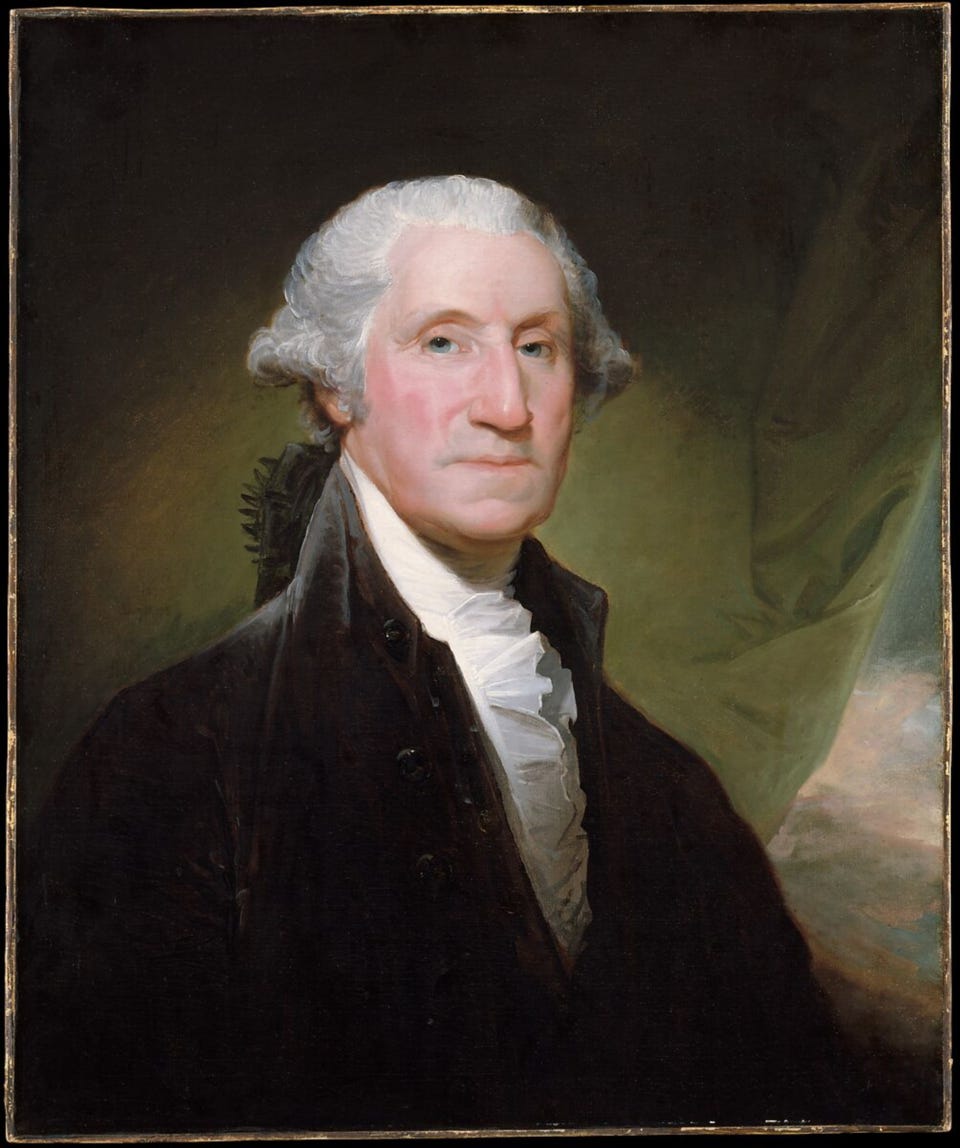
“There would always be a cool, quiet antagonism between Washington and his mother. The hypercritical mother produced a son who was overly sensitive to criticism and suffered from a lifelong need for approval.”6
Biographer Ron Chernow describes how this relationship affected George: “[I]n dealing with his querulous woman, [he] became an overly controlled personality and learned to master his temper and curb his tongue. It was the extreme self-control of a deeply emotional young man who feared the fatal vehemence of his own feelings, if left unchecked.”7
But controlled as he was, Washington could not hold these emotions at bay forever. Scarred by a hardened heart, he sought refuge in others.
Relationships for Reprieve
Rather than resist his emotions perpetually, Washington sought methods for managing them. Orderliness, self-discipline, personal industry—these practices worked to assuage the fury of his inner intensity. Yet it may be said that his personal relationships proved to be the most effective remedy for his inner turmoil.
Images of military men and the Founding Fathers often come to mind. Interestingly however, one relationship often goes unexamined—that with his wife.
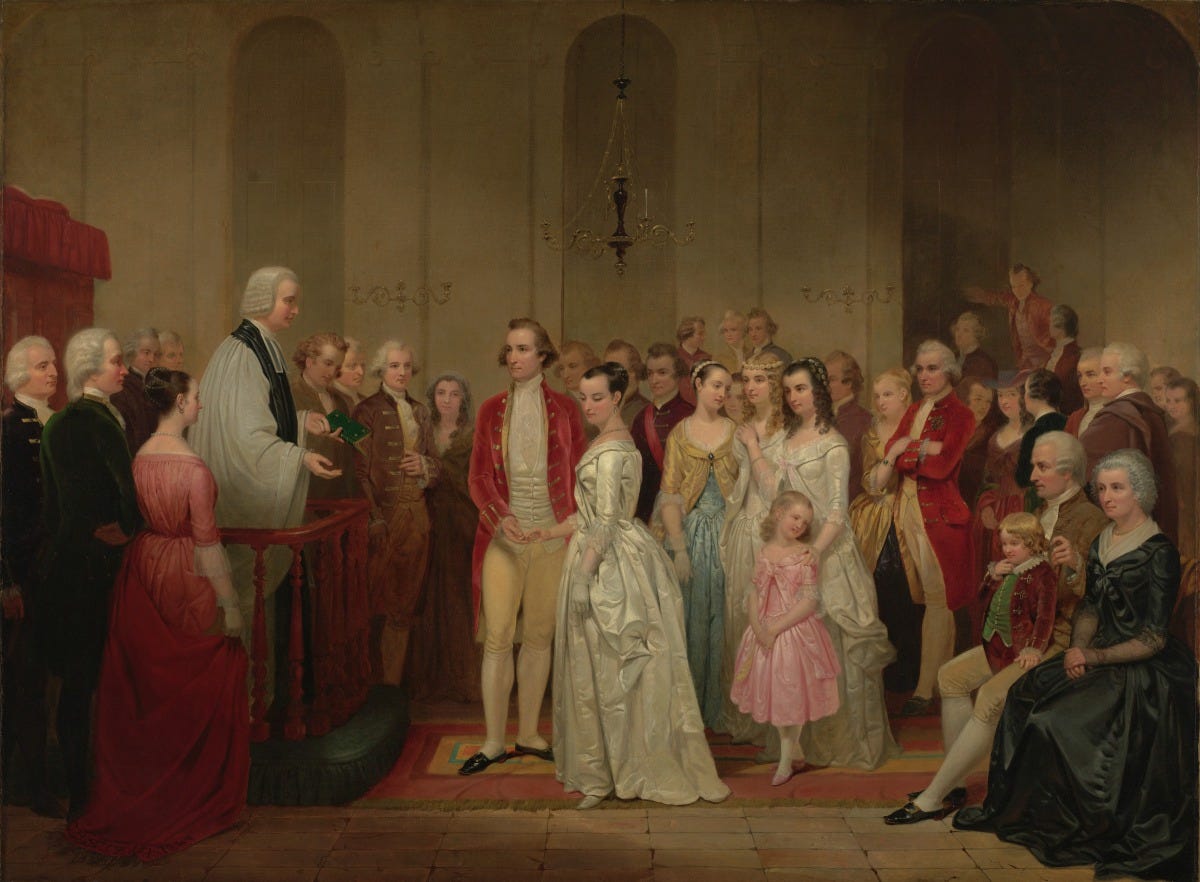
In Martha Dandridge Custis, Washington found the female companion that he never had with his mother.
During the war, she even went so far as to accompany him at camp: “Historians often note that Martha Washington spent each winter of the war with her husband, leaving before fighting resumed in the spring,” but Chernow says that “this bland statement doesn’t quite capture the scope of her sacrifice.”8
“Martha spent between 52 and 54 months with her husband in a war that would drag on for 103 months; in other words, she spent about half the war with the Continental Army.”9
Washington cherished these months. But Martha’s presence served more than a romantic purpose. Practically speaking, she allowed the commander in chief to be vulnerable during a period where the American Cause was in jeopardy of being extinguished among the beleaguered soldiers of the Continental Army. Chernow explains,
“Due to his delicate position in the war, he had to keep his emotions bottled up. He couldn’t afford to show weakness or indecision and needed a wife to whom he could reveal his frustrations.”10
An Exaltation of Women
Frank McCourt’s Pulitzer Prize-winning memoir, Angela’s Ashes, opens its Acknowledgments by stating, “This is a small hymn to an exaltation of women.”11 Doubtless, many readers share his feelings of gratitude; woe to any soul that does not.

Throughout his early life, Washington was one of those unfortunate souls. His mother’s sternness left him with scars that only another woman could heal. Perhaps his case is a unique example, but it still reveals much about human nature. Who among us does not struggle with frustration, doubt, or sadness?
These afflictions are not only common, but they are the very things that make us human. In Martha, George found the refuge that he was denied during his youth. His personal struggles remind us that even the most controlled and well-disciplined people cannot persevere long in this life without the sincerity and love of another.
Washington’s life and relationship with Martha demonstrates how pain caused by one can be treated by the love of another. It is through this framework that we should attempt to endure hardships—mere indifference will never be enough. Instead of relying on our inner strength, something that will eventually wear away, we must labor to find strength in each other.
If we stumble, or if we are betrayed, we must remember the words of Francis Cardinal Spellman, “To err is human; to forgive is divine.”
For no man is an island, nor a traveler who can go it alone.
“Thou art all fair, O my love, and there is not a spot in thee.”
—Song of Solomon 4:7
Thanks for Reading—Stay Tuned for More
Consider supporting with a Like, Share, or Restack—it helps more thoughtful readers like you find From the Shelves.
Have a strong, thoughtful week.
Leadership. Growth. Wisdom. From the shelves—for the Integrated Self.
Marcus Aurelius, Meditations, trans. Gregory Hays (New York: Modern Library, 2002), 4.49.
George Washington Parke Custis, Recollections and Private Memoirs of Washington (New York: Derby & Jackson, 1860), 418, quoted in Ron Chernow, Washington: A Life (New York: Penguin Press, 2010), xix.
John A. Schutz and Douglass Adair, eds., The Spur of Fame: Dialogues of John Adams and Benjamin Rush, 1805–1813 (San Marino, CA: Huntington Library, 1966), 98, quoted in Chernow, Washington: A Life, xix.
Ron Chernow, Washington: A Life (New York: Penguin Press, 2010), 11.
Ibid., 7.
Ibid., 11.
Ibid.
Ibid., 216.
Ibid., 216-17.
Ibid., 217.
Frank McCourt, Angela’s Ashes (New York: Scribner, 1996), 7.
A beautiful reminder that everyone needs and can benefit from support from their loved ones!