
Toxic Masculinity & Lion Slayers: What Samson & Hercules Teach Us Today
From a Biblical Hero to a Mythological Legend: What Samson & Hercules Tell Us About Masculinity Today

Introduction
“The drug dealer, the ducking and diving political leader, the wife beater, the chronically ‘crabby’ boss, the ‘hot shot’ junior executive, the unfaithful husband, the company ‘yes man,’ the indifferent graduate school adviser, the ‘holier than thou’ minister, the gang member, the father who can never find the time to attend his daughter’s school programs, the coach who ridicules his star athletes, the therapist who unconsciously attacks his clients’ ‘shining’ and seeks a kind of gray normalcy for them, the yuppie—all these men have something in common. They are all boys pretending to be men.”
—Robert Moore and Douglas Gillette, King, Warrior, Magician, Lover1
Today, the West is confronted with a crisis of boyishness. From rising instances of immature behavior that include, but are not limited to: drug addiction, alcoholism, obesity, indolence, mental illness, criminal behavior, and misogynistic behavior towards women, this much is clear. Explaining the situation further, Moore and Gillette write:
“The crisis in mature masculinity is very much upon us. Lacking adequate models of mature men… it’s ‘every man for himself.’”2
With few role models to turn to, it’s no surprise that many Western men are falling by the wayside and acting like immature boys who mistake boyish behavior for mature behavior. As a result, a great number of Western people have begun attacking masculinity in its entirety. They do this by criticizing anything that is traditionally masculine. What were once “benevolent” and “healthy” examples of masculinity are now being called “dangerous” and “toxic”.
Since there is great confusion over what actually constitutes masculinity, it’s imperative for us Westerners to define those aspects which are “benevolent”, i.e. helpful to society, and those which are “dangerous” and altogether harmful.
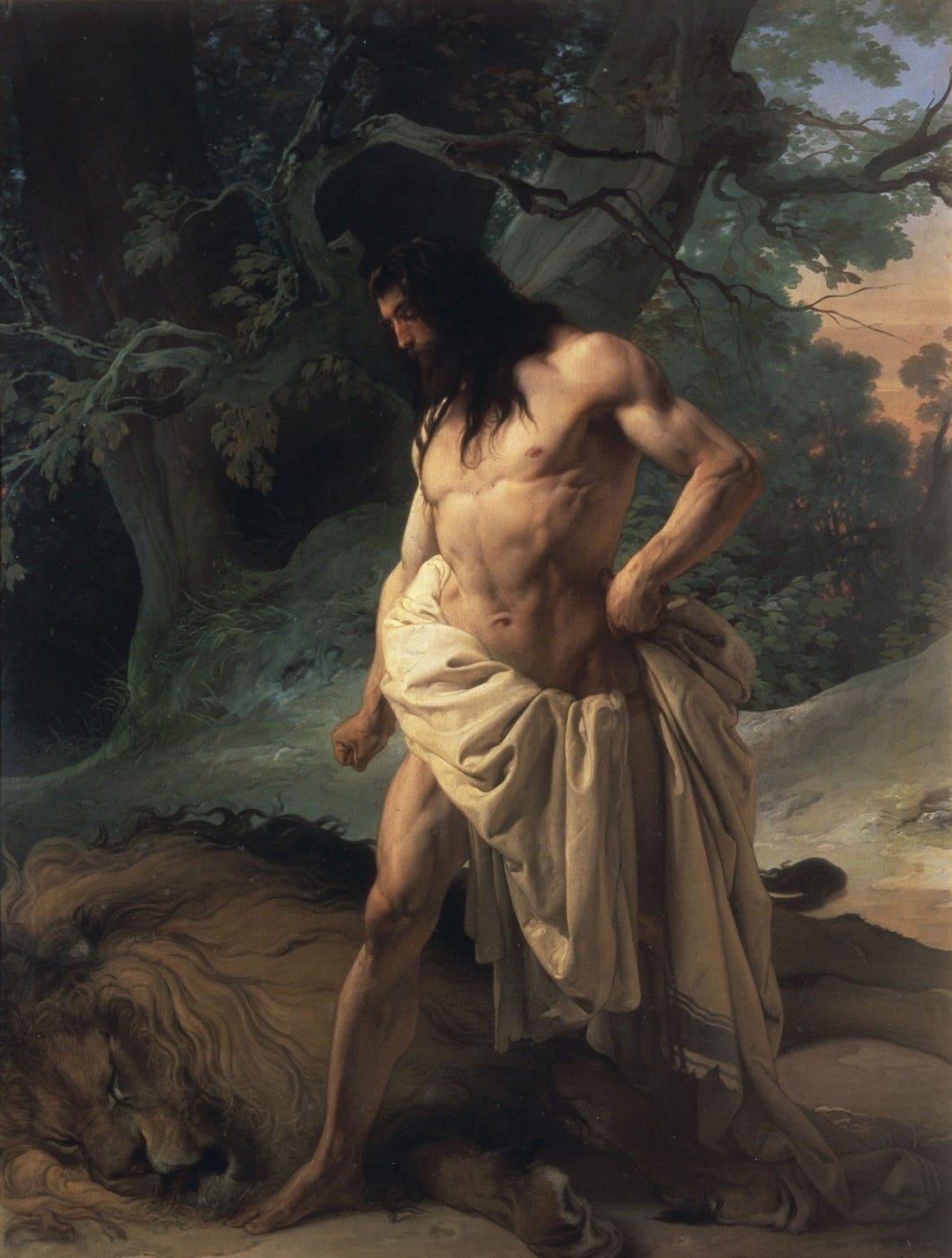
We will do this today by examining the characters of Samson and Hercules—two mythologic figures whose divine births, feats of strength, and inner struggles outline those features of masculinity which are “benevolent” and those which are '“dangerous”.
The Divine Birth: The Baby Boy As A Gift
While there are certainly “toxic” men, the same can hardly be said of young boys. In fact, young boys and their divine births support the claim that masculinity is not only “healthy”, but well-meaning for society.
To his mother who was struggling with infertility, Samson’s birth came as a blessing. Moreover, it was prophesized that he would rescue the children of Israel from the oppressive Philistines:
“And the angel of the Lord appeared unto the woman, and said unto her,
Behold now, thou art barren, and bearest not: but thou shalt conceive, and bear a son.
For, lo, thou shalt conceive, and bear a son; and no razor shall come on his head:
for the child shall be a Nazarite unto God from the womb:
and he shall begin to deliver Israel out of the hand of the Philistines.”3
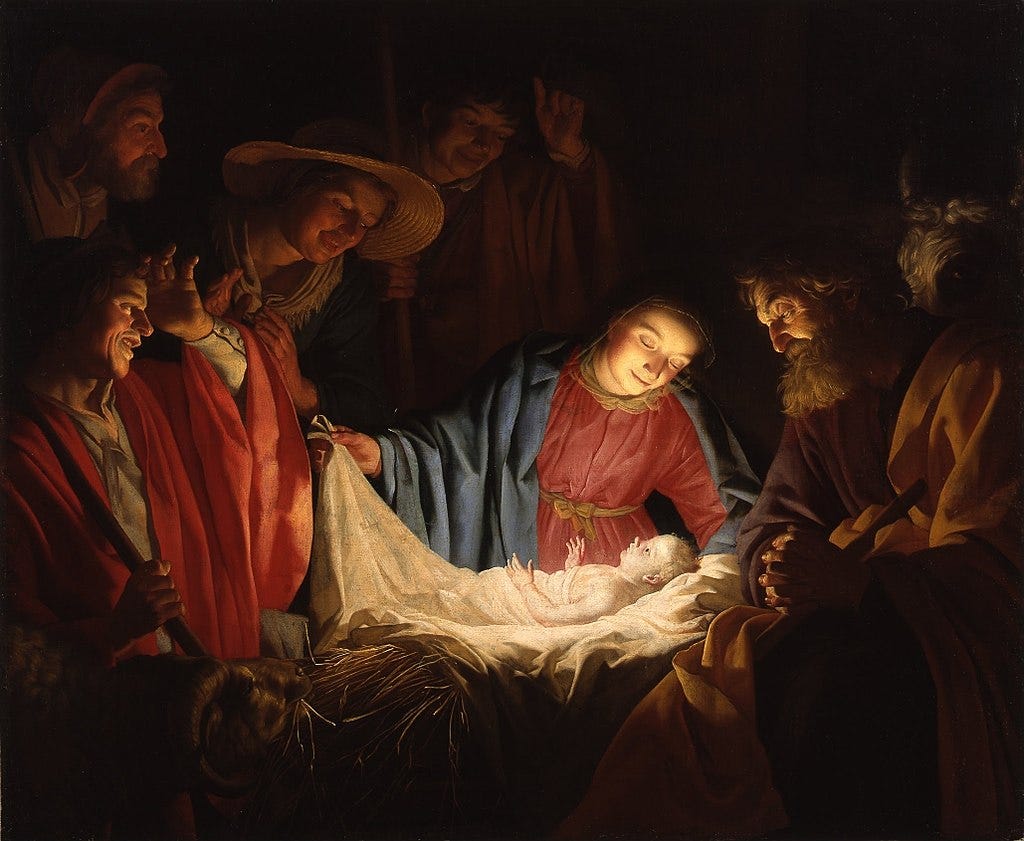
The prophetic nature of Samson’s miraculous birth represents how baby boys inspire hope and deliver joy unto others, even before they are born into the world. Anyone who has seen a pregnancy reveal video knows just how much happiness the news of a baby can bring into other people’s lives. A similar thing occurs to male patients undergoing psychoanalysis: “when a man in therapy starts to feel better, the urge comes to him, perhaps for the first time in his life, to have children.”4 This aspect of masculinity is beautiful and one that we should rightly celebrate:
“[The Divine Child] is the source of life. It possesses magical, empowering qualities, and getting in touch with it produces an enormous sense of well-being, enthusiasm for life, and great peace and joy, as it did for the young boy under the oak tree.”5
The Divine Birth: Masculinity Attacked From the Cradle
It’s quite ironic that, given how empowering and well-meaning young boys are, there are several examples from history and mythology where people try and persecute young boys—particularly infants:
“And Pharaoh charged all his people, saying, Every son that is born ye shall cast into the river, and every daughter ye shall save alive.”
—Exodus 1:226
Whether it be King Amulius ordering the deaths of Romulus and Remus in ancient Italy or King Herod murdering all boys under the age of two in Bethlehem, boys are historically at odds with the world around them.7
The same happened with Hercules: “When the child was eight months old, Hera desired the destruction of the babe and sent two huge serpents to the bed. Alcmena called Amphitryon to her help, but Hercules arose and killed the serpents by strangling them with both his hands.”8
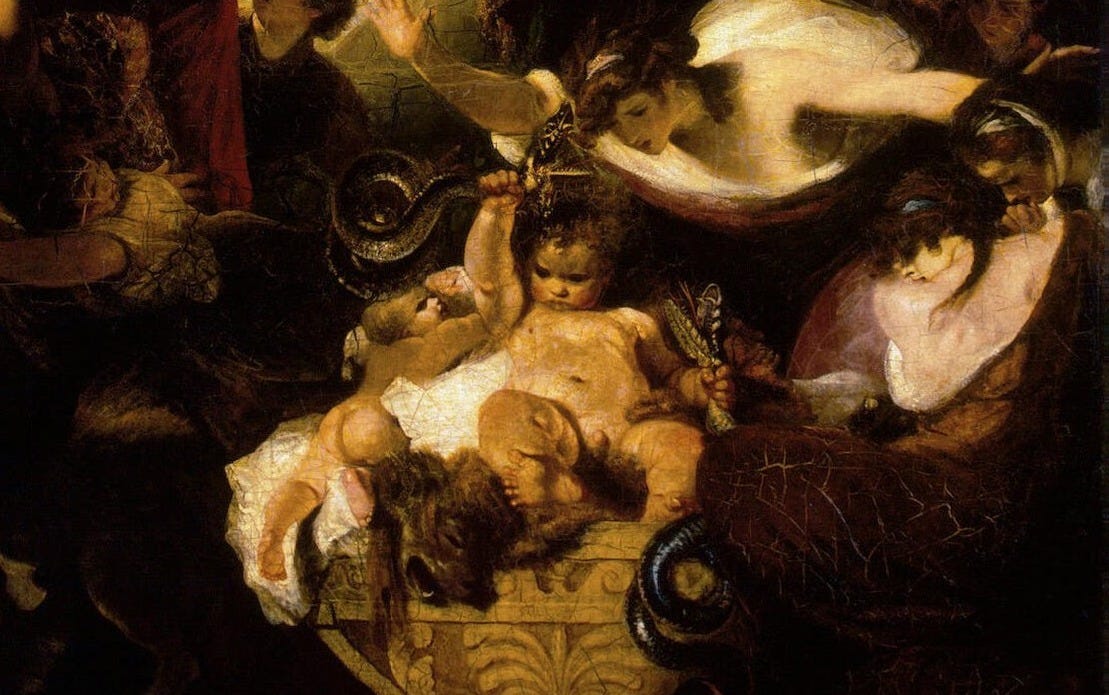
Today, young Western boys are being persecuted as early as the elementary school classroom: their enthusiasm is unfairly maligned as being disruptive and bothersome. Instead of being indulged, Western adults scold these boys—instead of celebrating their precocious enthusiasm, Western society medicates it with Ritalin and Adderall.
Additionally, social debates surrounding gender are leaking into the classroom. Just a few short years after they’ve begun learning how to read, young boys are being inculcated with material that explores topics such as homosexuality and gender dysphoria. What’s worse is that some adults are impressing their beliefs onto young children. This has resulted in cases whereby young boys are being compelled to take hormone blockers and in some cases, gender-reassignment surgeries.
In this light, masculinity is being attacked before it can fully develop. Perhaps it’s not masculinity that’s “dangerous”, but rather the world boys are born into. What were once snakes in the cradle are now known as “gender-affirming care”.
It seems we are putting Herculean pressures on young boys. To this we must ask ourselves: Do we really expect Western children to be able to strangle these snakes?
Innate Strength: Men as Lion Slayers
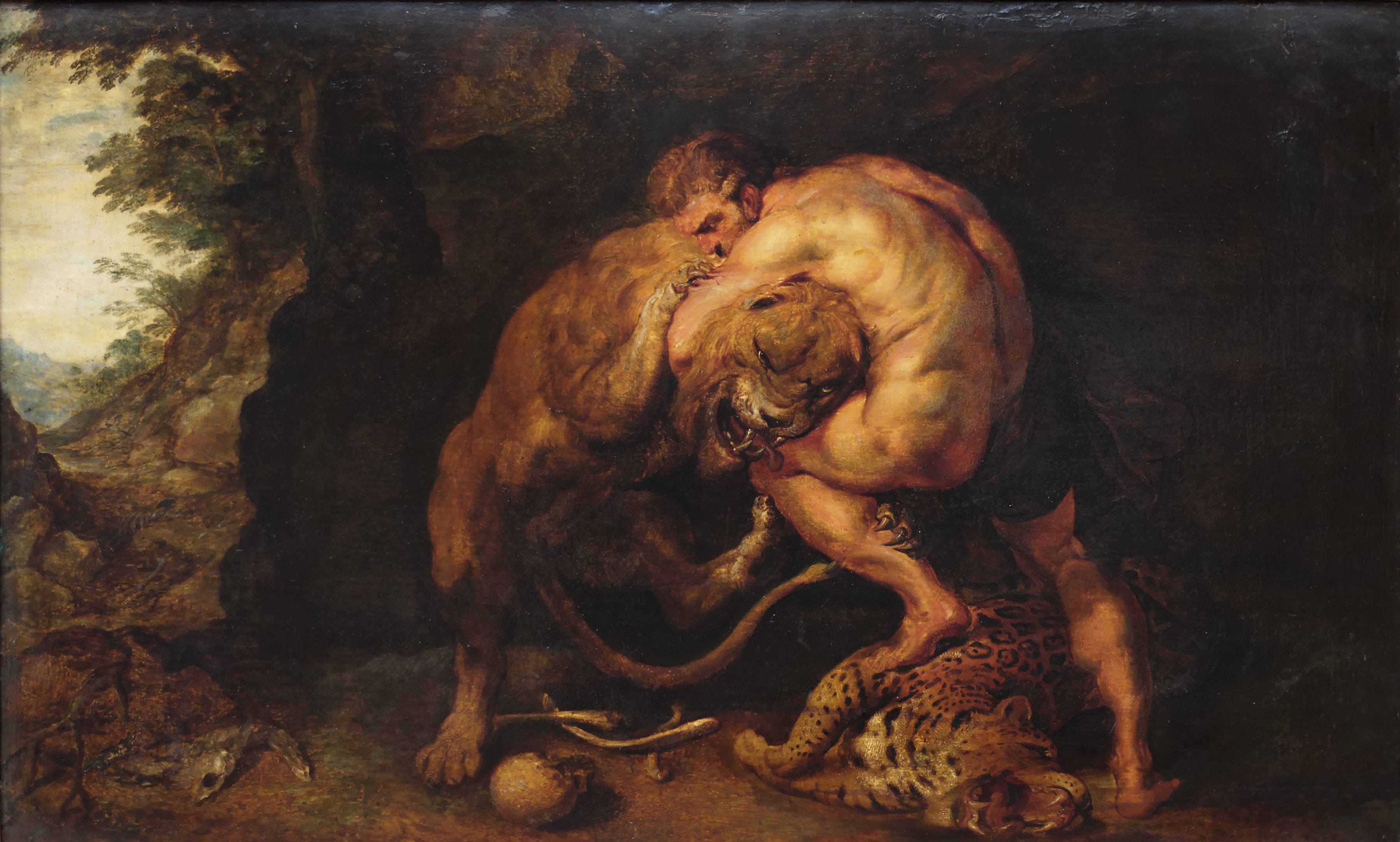
Men possess a tremendous amount of innate strength. Both Samson and Hercules symbolize this in their battles with the lion:
“Then went Samson down, and his father and his mother, to Timnath… and, behold, a young lion roared against him.
And the Spirit of the Lord came mightily upon him, and he rent him as he would have rent a kid, and he had nothing in his hand.”9

With Samson, the lion fight demonstrates the divine relationship that men share with God.
Similarly, Hercules, who defeats a lion that many thought was invulnerable, demonstrates how men’s innate strength can be used to overcome seemingly impossible odds:
“And having come to Nemea and tracked the lion, he first shot an arrow at him, but when he perceived that the beast was invulnerable, he heaved up his club and made after him. And when the lion took refuge in a cave with two mouths, Hercules built up the one entrance and came in upon the beast through the other, and putting his arm round its neck held it tight till he had choked it.”10
Slaying the lion symbolizes men’s ability to conquer the boogeymen that haunt and otherwise intimidate: the fear of failing in a creative endeavor, of being denied by a woman, of being rejected on a job application, of losing an athletic contest.
The boyish behavior of wife-beaters, abusive fathers, and gang members give strength a bad name. As such, traditional forms of strength are considered “toxic”. And while we should criticize the immature bullies who harm others, we must equally celebrate the noble lion slayers who put their strength to good use. After all, the only way for bad guys to have their way is when the good ones do nothing.
Inner Struggles: Men and Their Vices
While profoundly strong, both Samson and Hercules have a common weakness: their vices.
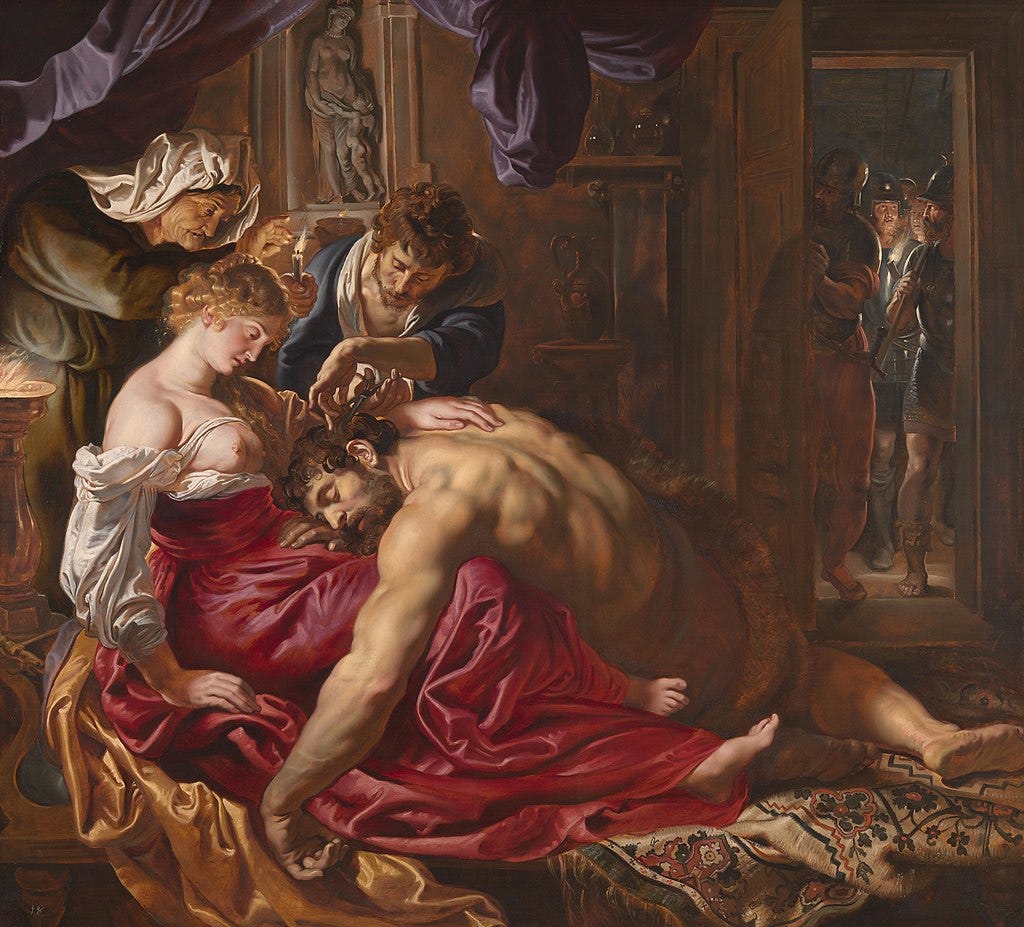
For Samson it was lust. Seduced by the harlot Delilah, he is ultimately tricked and betrayed by this Philistine woman.
In like manner, drunkenness lead to Hercules eventual undoing by the centaur Nessus.
Here it’s individual men—not masculinity as a whole—that’s inherently “toxic” as both figures—each supremely gifted and favored by divine powers—are ultimately undone not by others, but by personal vices.
The Good News for the West
Taken together, both Samson and Hercules represent how masculinity can be a “benevolent” and “healthy” force that is well-meaning and protective. Likewise, their vulnerabilities and vices show how even the strongest men can be undone.
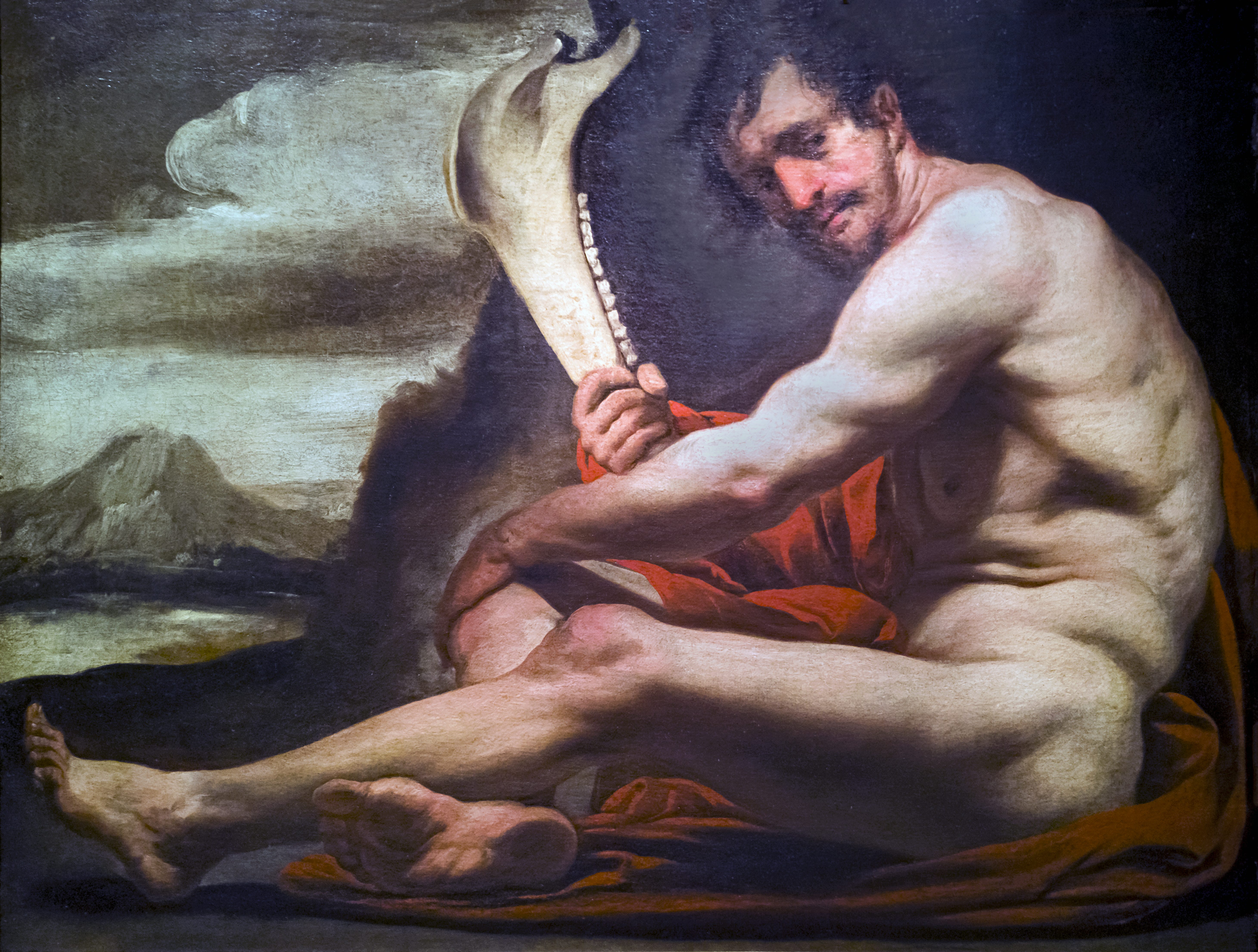
If the West can learn anything from these two, it’s that masculinity isn’t inherently “toxic” and that men should sharpen their God-given strengths while guarding against their susceptibility to worldly vices.
Thanks for Reading—Stay Tuned for More
If this spoke to you, consider supporting with a like, share, or restack—it helps more thoughtful readers like you find From the Shelves.
You’re part of a growing community committed to Leadership, Growth, and Wisdom—drawn from the shelves, and lived out in the world.
Have a strong, thoughtful week.
Subscribe for more From the Shelves content!
Leadership. Growth. Wisdom. From the shelves—for the Integrated Self.
Moore, Robert, and Douglas Gillette. King, Warrior, Magician, Lover. p. 13.
Ibid., p. 7.
The Holy Bible: King James Version, Judges 13:3, 5.
Moore, Robert, and Douglas Gillette. King, Warrior, Magician, Lover. p. 20.
Ibid., pp. 22-23.
The Holy Bible: King James Version, Exodus 1:22.
For a modern take on this theme, see Voldemort trying to kill the infant Harry Potter.
Apollodorus. Bibliotheca. Translated by Sir James George Frazer. 2.4.8.
https://www.perseus.tufts.edu/hopper/text?doc=Apollod.+2.4.8&fromdoc=Perseus%3Atext%3A1999.01.0022
The Holy Bible: King James Version, Judges 14:5-6.
Apollodorus. Bibliotheca. Translated by Sir James George Frazer. 2.5.1.
https://www.perseus.tufts.edu/hopper/text?doc=Apollod.+2.4.8&fromdoc=Perseus%3Atext%3A1999.01.0022
Thank you for sharing this with me. There’s a lot to consider here and I’m still working my way through it, but some initial thoughts:
I was especially struck by the analogy comparing the serpents in the cradle to the venomous ideologies targeting young boys today. As a father of two young sons this is a major concern for me. You described tyrants (who I’d argue are almost universally weak men) of the past so threatened by the idea of strong men that they sought to destroy boys while they were still children. I think we’re living through a form of that today.
And I like how you point out that both heroes were undone by their vices. Manhood is not just about possessing strength, but applying it to virtuous ends. I’m reminded of the Arthurian ideal of might serving right.
I wonder if the lions might symbolize unrestrained, self-serving strength.
Overall, a great piece that’s got me thinking about how I can use these stories to encourage my sons to value strength, courage, and virtue, to prepare them to strangle the snakes and lions that they will encounter throughout life.
I am stunned by how good this was, the values you preached, and the examples you gave. Everything was great. Keep the good work. 👍