
Science Can Explain Survival. It Cannot Explain the Human Soul.
On The Common Good and the Mystery of Human Sacrifice

Introduction
Amid the totalitarian crisis of the 1930s, French philosopher and theologian Jacques Maritain asked a sobering question:
“Does society exist for each one of us, or does each one of us exist for society?”1
Although initially posed against the rise of dictatorial power and state control that occurred in the twentieth century, we must reinterpret this question today. Given our modern generation of entitlement, self-obsession, and narcissism, there’s never been a better time to probe the dynamic of the individual and society.
To The Citizens Of The World
“The energy, the faith, the devotion which we bring to this endeavor will light our country and all who serve it—and the glow from that fire can truly light the world.”
— John F. Kennedy2
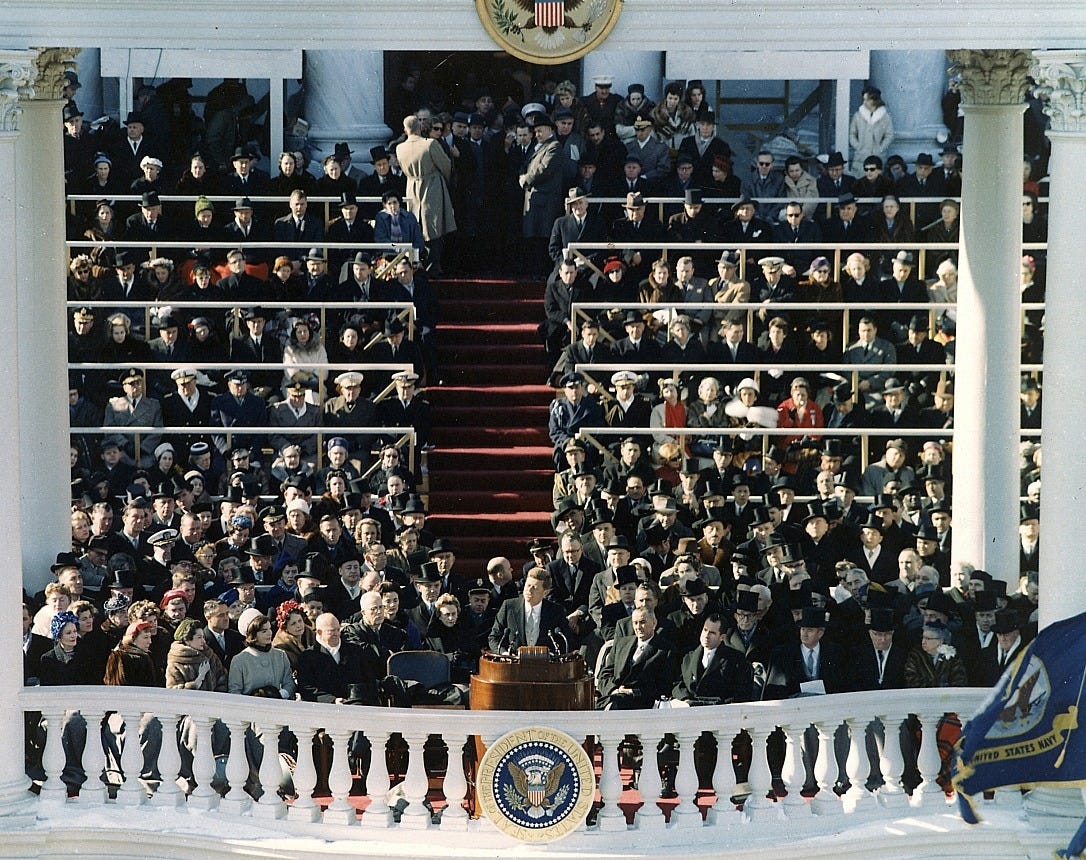
Delivered sixty five years ago, Kennedy’s Inaugural Address has since become one of history’s greatest speeches. Given our particular moment in time, we can still count those among us that were alive when the event took place. Yet, whether it be those who listened to it live or the generations that have heard it replayed since, almost everyone knows the following exhortation:
“And so, my fellow Americans: ask not what your country can do for you—ask what you can do for your country.”3
Just a year before the Cuban Missile Crisis, Kennedy’s words would have major societal ramifications as they were broadcast to a nation mired in the Cold War. In the decades since, these words have echoed through time, so much so that even the politically uninvolved could hum along to their tune. And while this line has become universally renowned, few could tell you the next line that immediately follow it:
“My fellow citizens of the world: ask not what America will do for you, but what together we can do for the freedom of man.”4
This difference speaks volumes about our modern state. The first exhortation calls upon the ideals of service and sacrifice—things that—especially after World War II—were considered to be the quintessential American virtues. Yet in the following line, Kennedy directs his appeal not to momentary patriotism and national service, but to a timeless pillar that is universally recognized: the common good of human society.
We may understand the speech’s impact in a new light: not only does it relate to the Cold War as a particular moment in American history, but also to the common good as an ongoing struggle of human history.
Order Amidst Chaos
Although the security of our modern, industrialized age tempts us into thinking that human civilization is readily approaching the “end of history,” we must remember just how perilous our situation really is.
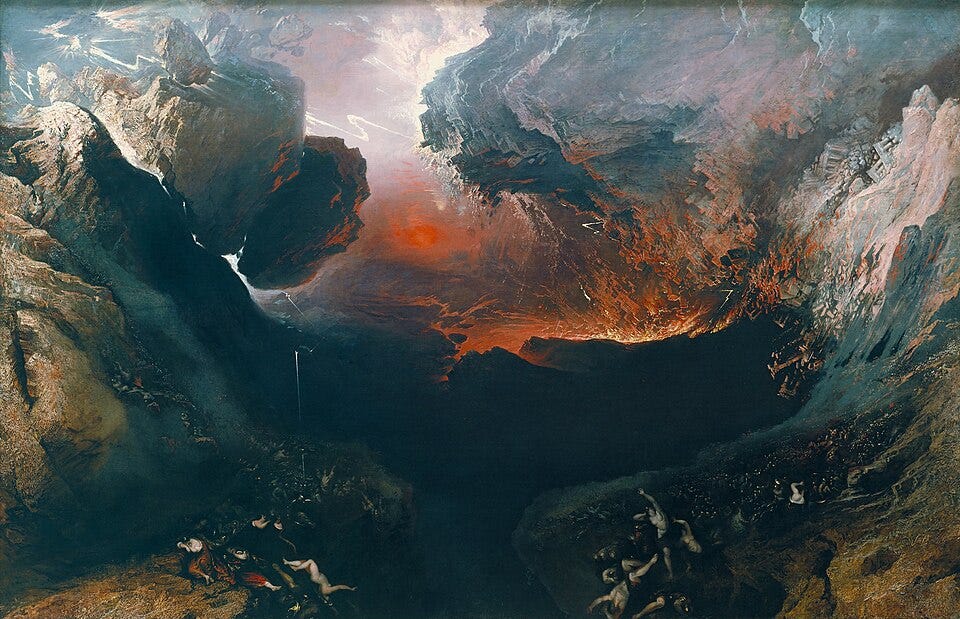
For although our age is one of unprecedented technological advancement, everything still hinges upon the earth’s pacificity. As Durant reminds us,
“At any moment a comet may come too close to the earth and set our little globe turning topsy-turvy in a hectic course, or choke its men and fleas with fumes or heat; or a fragment of the smiling sun may slip off tangentially—as some think our planet did a few astronomic moments ago—and fall upon us in a wild embrace ending all grief and pain.” 5
As a result of the earth’s dangerous and unpredictable nature, “man moves upon it as insecurely as Peter walking on the waves to Christ.”6
So amid the earth’s chaos, man seeks to establish among his tribe some order by which he may improve his situation. “Morals,” writes Durant, “are the rules by which a society exhorts (as laws are the rules by which it seeks to compel) its members and associations to behavior consistent with its order, security, and growth.”7
In this, man subordinates himself to that Divine presence which sustains and permits his survival. And in trying to probe the mysteries of this Divine Being, he strives for what he believes to be good: “Every art and every inquiry,” writes Aristotle, “and similarly every action and choice, is thought to aim at some good; and for this reason the good has rightly been declared to be that at which all things aim. . . .
“Shall we not, like archers who have a mark to aim at, be more likely to hit upon what is right?”8
Through seeking what is right, man discovers a first principle: that some goods are greater than others.
The Greater Good
Drawing on the writings of St. Thomas Aquinas, Maritain emphasizes how certain goods are greater than others. The cosmos, animals, and plants—each deemed by God to be good, are not greater than the human person: “the intellectual creature, which is capable of the supreme good, is more like unto the divine perfection than the whole universe in its entirety. For it alone is properly the image of God.”9
Underscoring how man alone was created in God’s image, this distinction gives human life a particular degree of sanctity and dignity that is entirely greater than the rest of Creation, save the Creator Himself. For man alone is the only creature capable of language and reason.
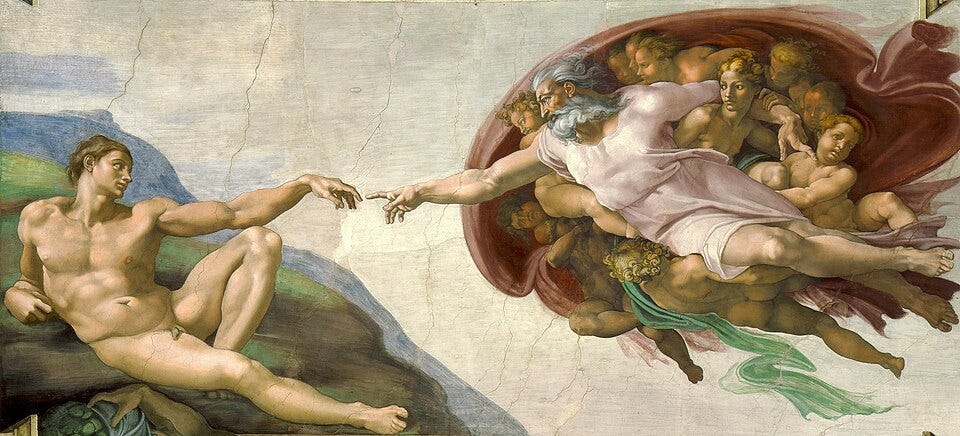
Endowed with this divine image, Maritain writes,
“The human person is ordained directly to God as to its absolute ultimate end. Its direct ordination to God transcends every created common good—both the common good of the political society and the intrinsic common good of the universe.”10
According to this view, neither political society (being manmade) nor all the universe (lacking the image of God) are greater than the human person.
“A single human soul is worth more than the whole universe of material goods.”11
With this in mind, we may turn to the nature of human society and address the question of whether society exists for each of us, or each of us for society.
The Person, Society, And The Problem of Science
On the relationship between the individual and the community, St. Augustine writes,
“For the blessedness of a community and of an individual flow from the same source; for a community is nothing else than a harmonious collection of individuals.”12
Herein lies an important point: the common good never detracts from the personal good; the personal good always aligns with the common good.
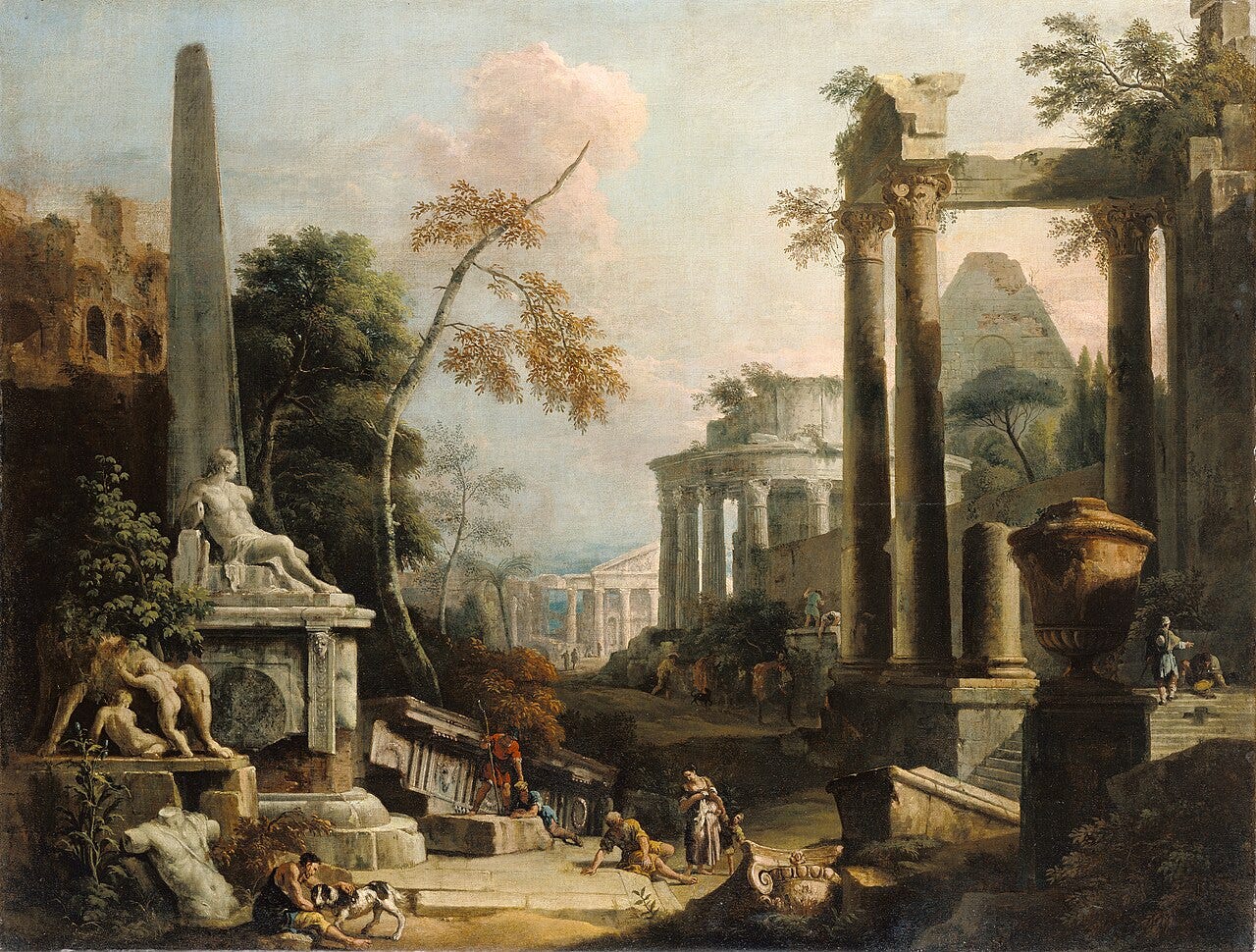
Especially today, many liken the dynamic between the common good and personal good to how one pours water from one vessel to another. Here, filling one requires the emptying of the other. This zero-sum view is false. The proper dynamic is such:
“All the rivers run into the sea, yet the sea doth not overflow: unto the place from whence the rivers come, they return, to flow again.”13
Unlike the zero-sum view, this second perspective demonstrates how the person and society are not in conflict, but concord. Such a notion may strike some as bizarre, particularly because our secular society, which continues to become more secular and materialistic, cannot readily explain things like altruism and selflessness.
To paraphrase David Sloan Wilson, many scientists can only explain organisms in society as nothing more than an illusion at the group level. Here, altruism is merely individual organisms increasing the fitness of their genes in the bodies of others through the self-serving benefits of deception and exploitation.14
This type of thinking has inspired many new-age philosophies of scientism, which maintain that human goodness is simply a mirage of evolution. Yet here the arrogance of atheism sprouts its head.
Human Dignity: What Science Can’t Answer
Despite their certitude, even the most experienced scientists have a difficult time explaining altruism, particularly in cases where the individual sacrifices itself for the greater good of the group:
“In particular, sociobiologists have been fascinated, even mesmerized, by the problem of explaining altruistic traits that benefit the group at great cost to the individual.”15
But herein lies the point: we are not discussing individuals, but persons. At first, such a difference may appear trivial, but as Maritain explains,
“Animal groups or colonies are called societies only in an improper sense. They are collective wholes constituted of mere individuals. Society in the proper sense, human society, is a society of persons.”16
Humans, as Cicero explains, are “united by use of reason and language. Teaching, learning, sharing, debating and judging attach people to one another, joining them in a kind of natural association. Nothing distinguishes us more from the nature of wild animals.” He goes on,
“We ascribe courage to them, for example to horses or lions, but never justice, fairness or goodness, because animals have no knowledge of reason or language.”17
Unlike the bee and the hive, or the fish and the school, each human person possesses a unique nature. This divine and complicated essence is a fickle thing that the greatest poets and scientists have long struggled to find an adequate handle upon.
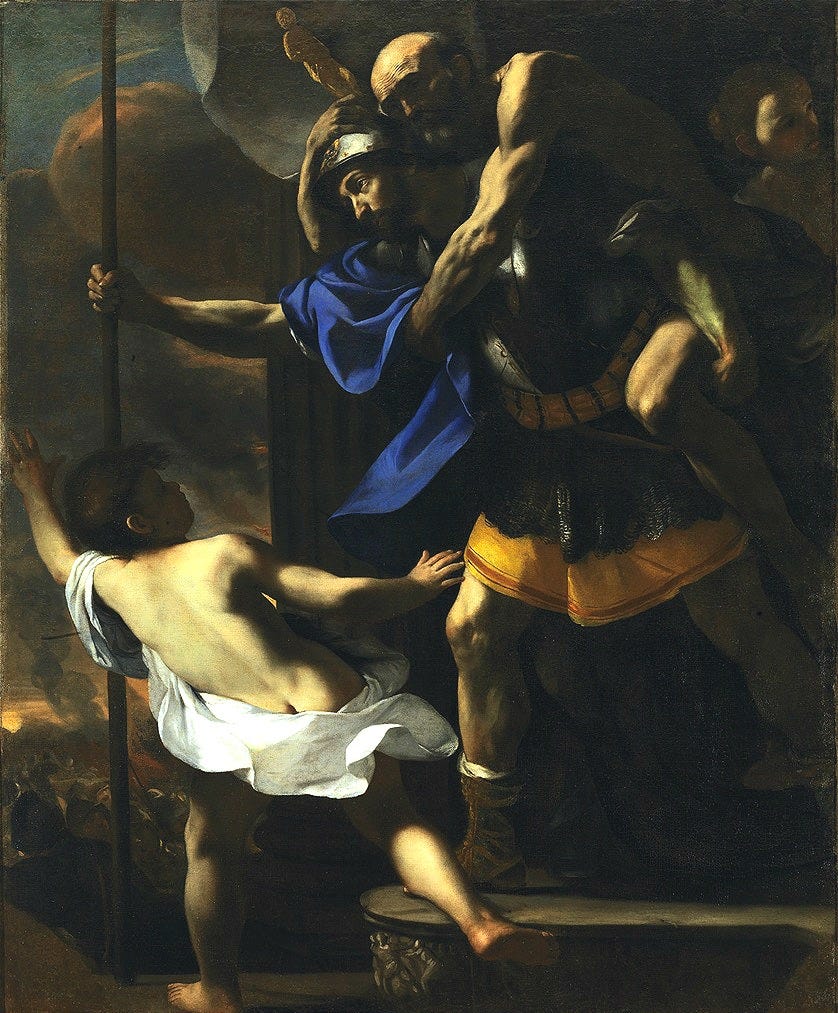
And for every act of human selfishness, one finds an equal act of charity. For in his imitation of God, man acts generously towards others; and, in doing so, he stores for himself “a great reward for the day of necessity.”18 And as Cicero reminds us, “No act is generous if it isn’t also just.”19
But the true wonder of human charity lies in its limitlessness. As the ancient Greek proverb20 goes:
A person who cheerfully shows the way to a wanderer
Lights his light from his own torch
It shines no less for him though he lit another.
Doubtless the skeptic will persist in his belief that such acts can be done sincerely. In his world of “selfish genes” there can be no notion of common good. Such thing is not only wrong, but its altogether destructive—all societies that hold to materialistic conceptions and the individual good are ultimately “driven to the insurrection of the parts against the whole. . . . to the tragic isolation of each one in his own selfishness or helplessness.”21 Examining Marxism, Maritain writes,
“A radical prejudice against all transcendence has, from its inception, forced communism to disregard the person as person and, as a consequence, the proper function of civil society as ta city of human persons.” 22
Indeed, any society which denies man’s ordination to God and the common good leaves only the supreme end of revolution. Order can never emerge from chaos.
Conclusion
“These reflections lead us to believe that the drama of the modern democracies has consisted in the unwitting quest of something good, the city of the persons, masked by the error of the city of the individual, which, by nature, leads to dreadful liquidations.”
— Jacques Maritain23
Justice, prudence, righteousness—these virtues are entirely of the human category. Without them, men would be nothing more than beasts; all heretofore examples of peace, reason, and sacrifice would be nothing more than chance coincidences.
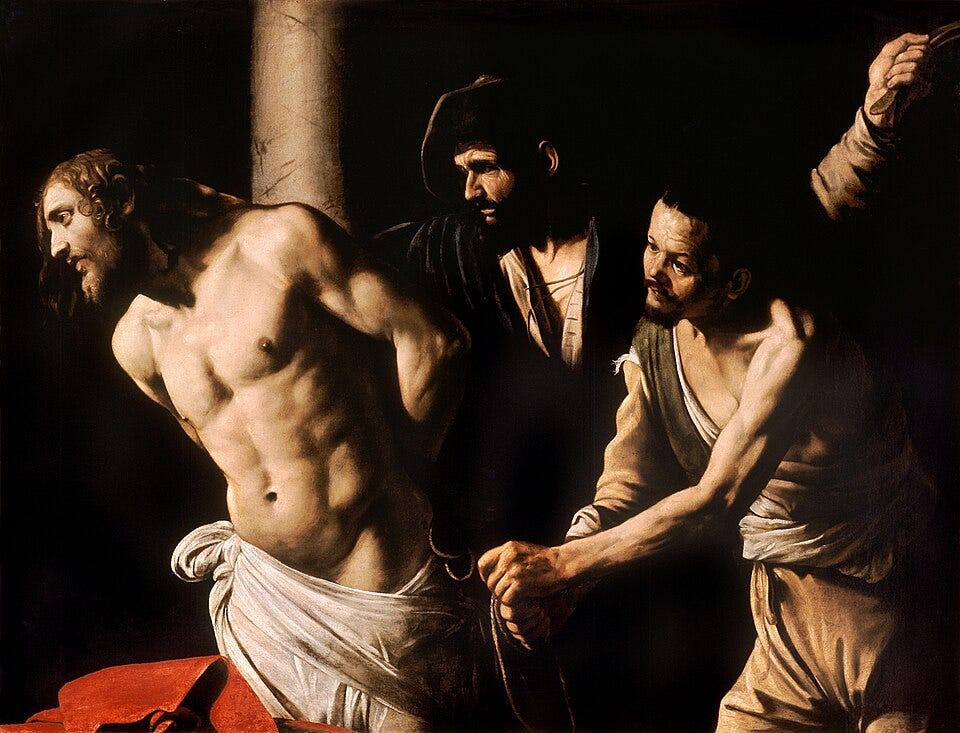
No single nation—past, present, or future, can rightly proclaim ownership of them; only devotion to them—for they are timeless, and belong only to the Creator.
That is why Kennedy ended his Inaugural not with an appeal to patriotism, but with an appeal to the common good, and what one can guarantee to be his good reward.
As the adage goes, “When God gets first place, life falls into place.”
“With a good conscience our only sure reward, with history the final judge of our deeds, let us go forth to lead the land we love, asking His blessing and His help, but knowing that here on earth God’s work must truly be our own.”
— John F. Kennedy24
Thanks for Reading—Stay Tuned for More
Consider supporting with a Like, Share, or Restack. Each recommendation helps reach readers interested in history, meaning, and the questions of civilization.
Have a strong, thoughtful week.
Res novae. Ancient wisdom for unprecedented times.
Jacques Maritain, The Person and the Common Good (Notre Dame, IN: University of Notre Dame Press, 1966), 11.
John F. Kennedy, "Inaugural Address," January 20, 1961, John F. Kennedy Presidential Library and Museum, https://www.jfklibrary.org/archives/other-resources/john-f-kennedy-speeches/inaugural-address-19610120.
Ibid.
Ibid.
Will and Ariel Durant, The Lessons of History (New York: Simon & Schuster, Inc., 1968), 14.
Ibid., 15.
Ibid., 37.
Aristotle, Nicomachean Ethics, trans. David Ross, rev. with an introduction and notes by Lesley Brown (New York: Oxford University Press, 2009), 3 (1094a1–3, 24–25).
Jacques Maritain, The Person and the Common Good, 20.
Ibid., 15.
Ibid., 61.
Augustine, City of God, Modern Library ed. (New York: Random House, 1993), bk. 1, chap. 15, 21.
Holy Bible: Douay-Rheims 1899 American Edition, Ecclesiastes 1:7.
David Sloan Wilson, Darwin’s Cathedral: Evolution, Religion, And The Nature Of Society (London: University of Chicago Press, 2002), 12.
Ibid., 18.
Jacques Maritain, The Person and The Common Good, 47.
Marcus Tullius Cicero, On Living and Dying Well, trans. Thomas Habinek (London: Penguin Classics, 2012), 125–26.
Holy Bible: Douay-Rheims 1899 American Edition, Tobias 4:10.
Marcus Tullius Cicero, On Living and Dying Well,124.
Ibid., 126. Cicero is quoting Ennius from an unidentified play.
Jacques Maritain, The Person and The Common Good, 92-93.
Ibid., 93.
Jacques Maritain, The Person and the Common Good, 105.
Kennedy, "Inaugural Address."
We all miss a President who speaks in complete sentences and inspires us to be our "best angles." Thanks for all the ways of looking at the human condition, justice, and the common good.
Beautiful article. Also, great timing, because this question about the common good and human sacrifice ties into my article on the offering of suffering.